
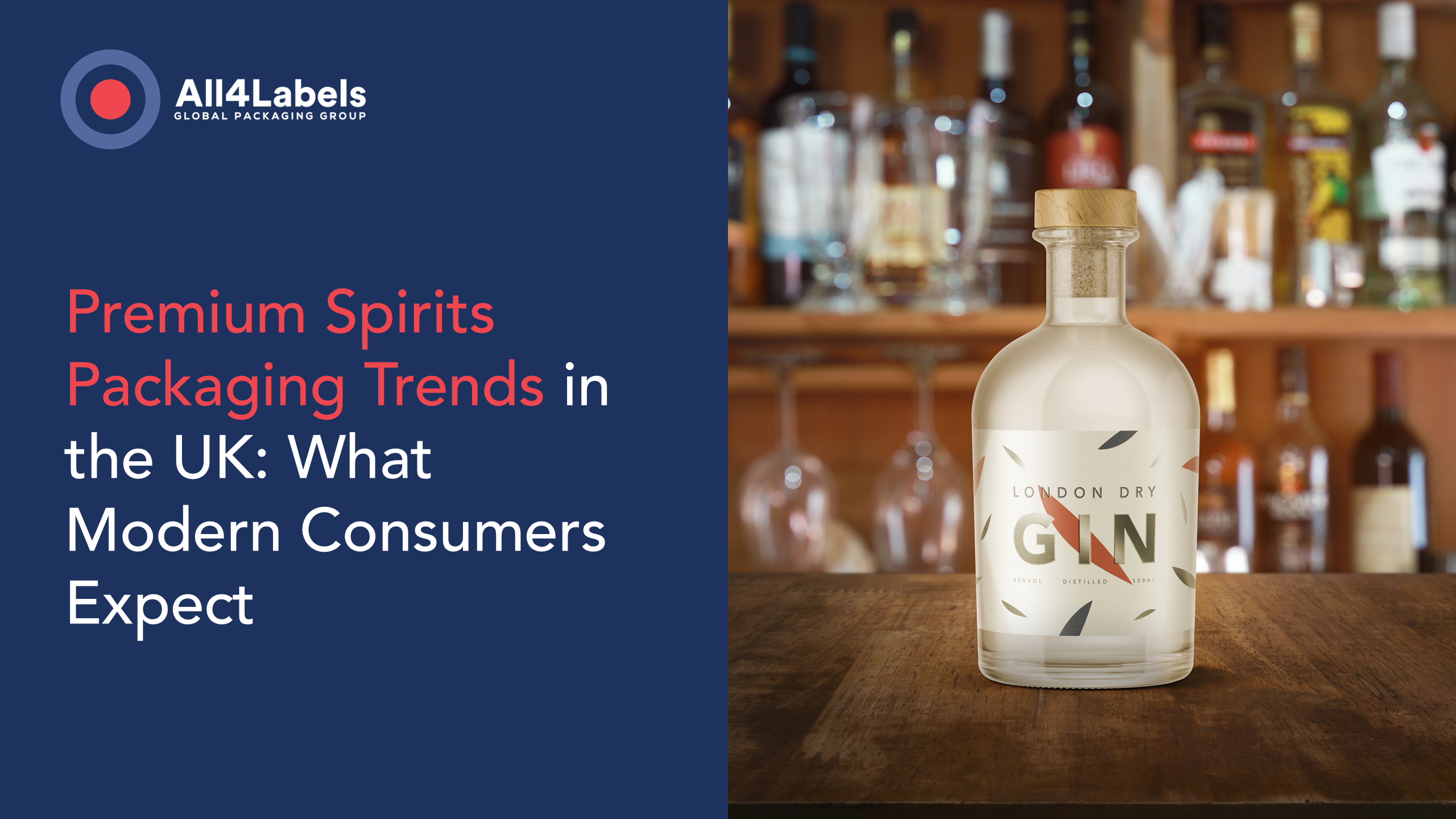
In the UK spirits market, premiumisation is no longer defined by the beverage alone. From craft gin and small-batch rum to limited-edition whisky releases, consumers judge quality before the bottle is opened.
This initial judgement is influenced by packaging.
The label, closure, secondary packaging and overall shelf presence all shape brand perception, influence purchase decisions and communicate the story behind the brand.
For distilleries and drinks brands competing in a crowded retail environment, luxury spirits packaging is a powerful tool for standing out, building trust and justifying a premium price point.
Why Packaging is a Signal of Premium Value
Packaging heavily influences perceived product value.
It shapes consumer perceptions before a product is even opened or tasted. In the UK spirits market – which is very competitive – brands use carefully considered packaging to communicate quality, craftsmanship and attention to detail at first glance.
Consumers often make split second judgements whether that be down a supermarket aisle, in a speciality store or shopping online. Your packaging is a key driver to helping that decision be your brand.
In premium beverages, consumers often make these quick decisions based on visual cues: texture, colour, finish, typography all the way to how a bottle catches the light. A well-designed whisky label can suggest heritage and craftsmanship, while a clean, contemporary gin label can communicate purity, innovation or botanical freshness.
For brands investing in whisky label printing in the UK, creating this sense of premium value means striking the balance between tradition with modern appeal. Packaging elements such as textured papers, embossed crests and metallic foils continue to reinforce quality.
However, today’s modern premium spirits packaging often combine minimalist layouts with carefully selected embellishments, creating a refined appearance that feels like elevated, considered design rather than excess.
Premium Embellishments That Tell a Story
One premium packaging trend that will always be here to stay in spirits labelling is embellishments.
Foiling, embossing, debossing, high-build varnishes, spot gloss and textured coatings all add visual depth and tactility. These finishes help guide attention to key brand assets, such as a logo, vintages, batch number or tasting cues.
For premium beverage labels, embellishments should be purposeful. A raised crest can support a heritage-led whisky brand. A subtle debossed pattern can suggest craft. A gloss varnish over botanical illustrations can add freshness to a gin label.
The most successful designs use finishing techniques to reinforce the brand narrative, rather than adding decoration for decoration’s sake.
At All4Labels UK, we offer both conventional and digitally printed embellishments to suit each brand and product need in a tailored way.
Tactile Finishes Create a Sensory Connection
Creating a tactile experience is another method of signalling luxury and premium in the spirits market. This can be done through embellishments, materials and label construction.
In a retail setting, the moment a consumer picks up a bottle is a valuable brand interaction. Soft-touch coatings, textured stocks, high-build varnishes, innovative multi layered interactive label constructions and sculpted embossing can all make a label feel more considered and memorable.
Tactile finishes are particularly powerful because they slow the shopper down. They encourage handling, invite closer inspection and create an impression of care.
For spirits brands, that physical engagement can support the perception of small-batch production, ingredient quality and attention to detail. In premium categories, where consumers are often buying for gifting or special occasions, the feel of the packaging can be just as influential as the look.
Metallic Effects Remain a Premium Shortcut
Metallic effects continue to be strongly associated with celebration, craft and exclusivity. Gold, copper, bronze, silver and holographic finishes can add instant shelf impact, especially under retail lighting.
For whisky, metallic accents often communicate warmth, age and prestige. For gin, vodka or rum, they can create a sharper contemporary aesthetic.
The key trend is precision. Rather than covering large areas, many premium spirits brands use metallic detail to highlight a focal point. Fine foil lines, metallic typography, medallions, borders or limited-edition numbering can elevate the design while keeping it sophisticated.
This approach also gives brands flexibility to create tiering across a range, helping consumers quickly distinguish core, premium and ultra-premium products.
Sustainable Premium Packaging Is Now Expected
Consumers increasingly expect premium spirits brands to reduce waste, improve recyclability and choose materials responsibly, without compromising the luxury experience.
This is especially important as brands respond to regulatory pressure, retailer sustainability requirements and growing consumer scrutiny.
Sustainable premium packaging can include recycled-content materials, responsibly sourced papers, wash-off adhesives, lighter-weight label constructions and reduced material formats.
The best solutions maintain shelf appeal while supporting circularity.
For spirits brands, this means sustainability should be designed into the packaging from the beginning, not treated as an afterthought.
Want to learn more about our sustainable label solutions in the UK? Click here.
STARSHINE™ and STARDIRECT™: Premium Impact with a Lighter Footprint
At All4Labels, we are dedicated to crafting packaging innovations that enable brands to connect with the consumer, while also meeting sustainability goals.
Innovative labelling solutions within our Global STAR portfolio such as STARSHINE™ and STARDIRECT™ are clear examples of how premium decoration can evolve to meet sustainability expectations.
STARSHINE™ offers a metallic-effect finishing process designed to deliver a sophisticated, high-impact appearance while reducing waste and emissions compared with traditional foil-based approaches.
For brands that want shine, elegance and shelf standout, it provides a route to premiumisation with improved environmental performance by eliminating the waste typically seen with foiling and only applying the metallised solution where required.
STARDIRECT™ supports a premium ‘no label’ look by applying decoration directly to the container while being manufactured in the same way as a label, rivalling direct printed bottles particularly when it comes to MOQs and lead times. For spirits brands using glass bottles, this can create a clean, modern aesthetic while reducing material use and accelerating speed to market.
It is particularly relevant for brands looking to combine luxury spirits packaging with stronger sustainability credentials and a more distinctive pack architecture.
Enabling Luxury Spirits Labels by Utilising Hybrid Printing
Hybrid print is becoming increasingly valuable for spirits brands because it combines the flexibility of digital print with the quality and finishing capabilities of conventional embellishments.
This is especially useful in a market where brands may need limited editions, seasonal launches, personalised labels or multiple SKUs without sacrificing premium finishes.
Digital print enables shorter runs, variable data and faster turnarounds, while conventional processes add tactile and visual enhancements such as foiling, embossing and varnishes.
Together, the combination of these technologies allow brands to test new designs, launch collector’s editions and respond quickly to market trends.
For growing distilleries, hybrid print can make premium spirits labels in the UK more accessible, scalable and commercially realistic.
Concluding Thoughts – Shelf Standout Still Matters
Even as ecommerce and direct-to-consumer sales grow, shelf standout remains critical in retail environments.
Spirits shelves are visually competitive, and premium products must work hard to earn attention. Shape, colour, contrast, finish and hierarchy all influence whether a shopper notices a bottle, understands the proposition and feels confident enough to purchase.
Strong packaging design should communicate the brand story quickly. To achieve this, you should ask yourself these questions early on:
- Is the spirit traditional or experimental?
- Is it suited to gifting, sipping, cocktails or collecting?
- Is it local, sustainable, limited edition or award-winning?
Premium beverage labels need to answer these questions clearly while still creating intrigue. The best designs are both beautiful and commercially effective.
The future of premium spirits packaging in the UK is about balance. Luxury with responsibility, standout with subtlety, and tradition with innovation.
Whether a brand is refreshing a core range, launching a limited-edition whisky or developing a new craft spirit, the right label and decoration strategy can make the difference between being seen and being selected.
As expectations continue to rise, premium packaging will remain central to how spirits brands communicate quality. Those that invest in carefully considered design, sustainable innovation and high-impact finishing will be best placed. Capturing attention, building loyalty and competing in an increasingly premium market.
Contact our team All4Labels UK and let’s talk about the future solution to your premium packaging.